When we think of a Medieval Knight, the mind often conjures images of clashing steel, mud-stained banners, and the raw scent of leather and sweat. However, historical reality paints a far more sophisticated picture. In the courts of the 12th to 15th centuries, the ideal knight—the Chevalier—was not just a machine of war, but a paragon of refinement. Beneath the heavy plates of iron armor lay a surprising secret: a carefully curated world of fragrance that defined the essence of chivalry.
The Knight’s Duality: Warrior and Courtier
The life of a knight was split between the brutal reality of the battlefield and the poetic elegance of the royal court. To be a “True Knight,” one had to master both the sword and the art of “Courtly Love.” Fragrance played a pivotal role in this transition.
Before entering a banquet hall after a long campaign, a knight would undergo rigorous cleansing rituals. High-ranking warriors often bathed in water infused with aromatic herbs like bay leaf, cedarwood, and sage. These scents were chosen not only for their pleasant aroma but for their symbolic associations with wisdom, strength, and purification. By the time the knight donned his silk tunic and velvet doublet, he carried the scent of the forest and the sanctuary—a stark contrast to the metallic tang of the battlefield.
The “Scented Favor”: A Token of Protection
One of the most romantic aspects of medieval knightly culture was the “favor“—a scarf, veil, or sleeve given by a lady to her champion. These tokens were almost always heavily perfumed with rosewater, violet, or musk.
A knight would carry this scented token close to his heart, often tucked beneath his breastplate. In the heat of battle, amidst the dust and chaos, the faint scent of the lady’s perfume served as a sensory anchor. It was a reminder of the civilization he was fighting to protect and a “talisman” believed to bring divine luck. This practice laid the foundation for the association between perfume and emotional memory—a concept that remains the heart of perfumery today.
The Olfactory Profile of the Iron Age
What did a knight actually smell like? The fragrances of the knightly class were “active” and “assertive,” designed to project a presence that was both noble and formidable.
- The Power of Leather & Birch Tar: These scents mirrored the knight’s equipment. Birch tar, used to waterproof leather, gave off a smoky, campfire-like aroma that symbolized rugged endurance and the outdoor life of a campaigner.
- The Sacred Woods (Cedar & Sandalwood): Brought back by crusaders from the Levant, these precious woods represented the knight’s role as a “Soldier of the Faith.” They provided a dry, masculine, and grounding base that commanded respect.
- The Sharpness of Herbs (Rosemary & Thyme): In the Middle Ages, rosemary was the herb of remembrance. Knights used these sharp, camphoraceous scents to keep the mind alert during long vigils and to project an aura of cleanliness and vitality.
- The Exotic Spices (Black Pepper & Cardamom): Only the wealthiest knights could afford scents containing rare spices. A hint of pepper in a scent profile was a subtle “status symbol,” indicating that the wearer had traveled far and possessed great wealth.
Scent as a Tactical Advantage
Surprisingly, fragrance also had a practical side in medieval warfare. Many knights applied strong aromatic oils like camphor and peppermint to their temples and chests. These “cooling” scents were believed to sharpen the senses, improve focus, and prevent fainting under the stifling heat of a closed helmet. In this sense, perfume was a part of their tactical kit—an invisible tool for mental fortitude.
The Modern Knight: Bottling the Spirit of Valor
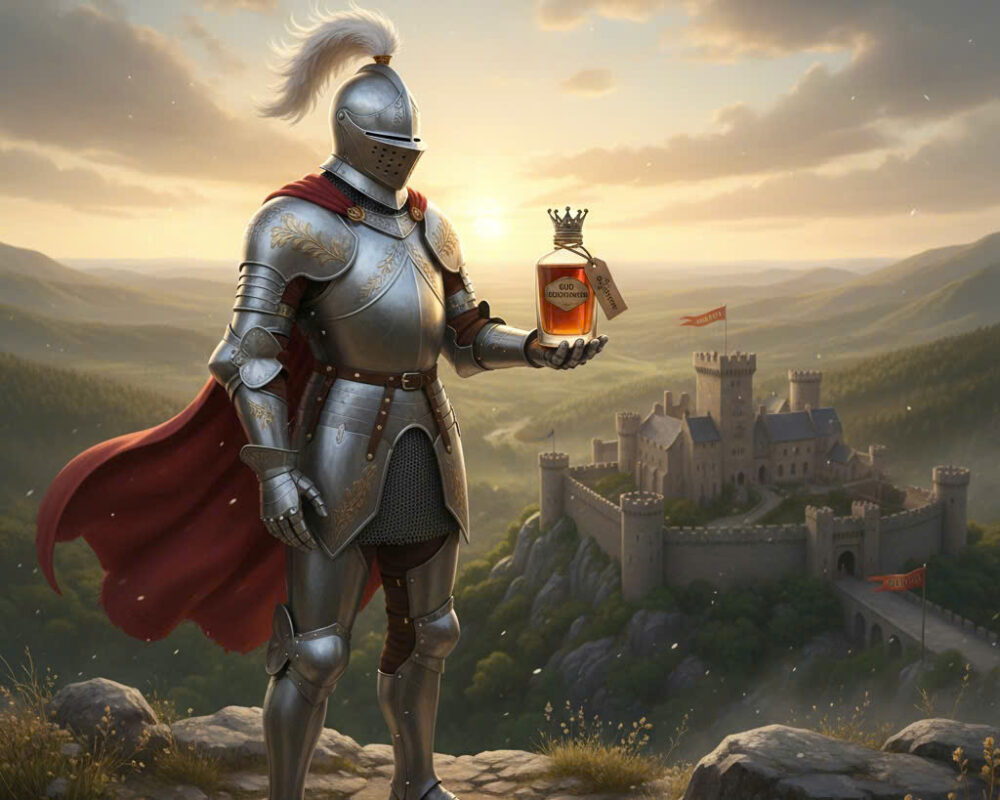
At Febamourst, our “Knight’s Collection” is designed for the modern individual who balances strength with sophistication. We have captured the essence of the Chevalier by blending the ruggedness of smoked leather and dark woods with the refined elegance of crushed herbs and oriental resins.
Wearing these scents is an act of “modern chivalry.” It is for the man or woman who stands firm in their convictions but moves through the world with grace. Whether you are navigating the “battlefield” of a modern boardroom or attending a formal gala, our knight-inspired fragrances provide an aura of quiet power and timeless honor.
Why the “Knight’s Profile” Suits the Modern Man and Woman:
- Assertive but Refined: It moves away from overly sweet modern scents toward something more “architectural” and structured.
- A Story of Resilience: The smoky and herbal notes evoke a sense of history and adventure.
- Unisex Appeal: Much like the medieval “favor,” these scents transcend gender, focusing instead on the virtues of courage and loyalty.
Step out of the shadows of the ordinary. Clad yourself in the fragrance of legends.
